
Humanitarian Impact
- Provides fresh produce for residents and evacuees; supports mass feeding of 3,500-5,000 meals/day (surge) during storms.
- Delivers therapeutic, purposeful work that complements behavioral-health programs.
The agriculture district strengthens food security, supports daily feeding operations, provides workforce training, and forms a cornerstone of the campus's disaster-response capability.
Controlled-environment greenhouses provide year-round production of vital crops, seedlings, and supplemental emergency food supplies.
Open fields and orchard rows increase production diversity and supply fruit, staple foods, and value-added goods for community consumption and revenue.
Waste-to-resource systems support sustainability and improve soil quality for long-term agricultural reliability. Animal bedding and kitchen scraps are blended with solids from the campus waste-management zone, giving orchards and landscaping a steady supply of safe, nutrient-rich compost.
During disasters, agricultural output supports the ability to feed thousands of residents daily.
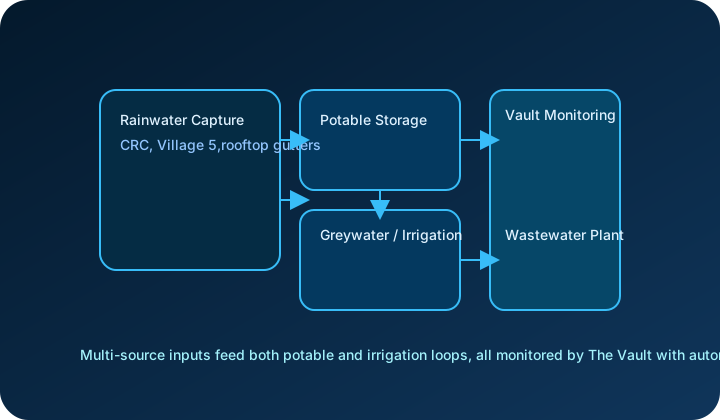
The agriculture district shares pumping, storage, and greywater reuse with the campus water systems, ensuring irrigation even when public utilities fail. Produce waste supports composting for equine bedding and soil regeneration, creating a closed-loop model. Reclaimed water from the Waste Management & Treatment system supplements irrigation and washdown networks, so agriculture can keep operating while potable supplies are conserved for residents.
Agriculture provides training in greenhouse management, horticulture, soil science, logistics, and sustainable food systems.
Five core pillars are shown first; supporting highlights are labeled.

Connect with STX Vets Project
Whether you represent investors, federal partners, local government, or you are an individual supporter, we would love to hear from you. Choose the option that fits best and send us a note.